

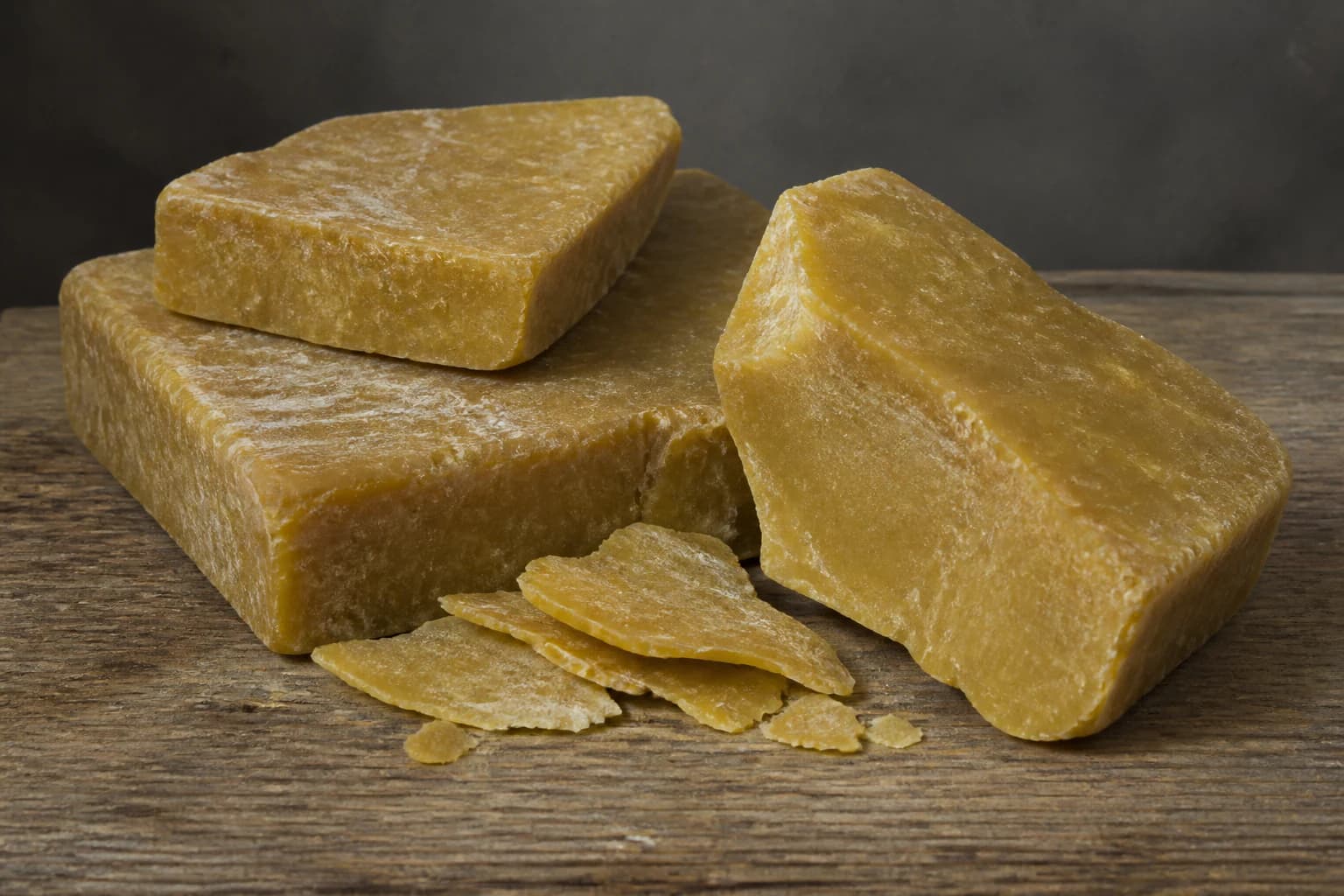
Beeswax
The 1890 rules required church candles to be made from pure beeswax.
This is a general historical rule, not a laboratory analysis of Zelino output.
Sources: N. Markov, “Wax candle”, Orthodox Theological Encyclopaedia, vol. III, 1902
Russian Empire · Zelino · Staritsa
Documented evidence about the materials, equipment and operations of the candle workshop.
The church candle was both a liturgical object and the product of specialised works. Historical sources describe requirements for wax and wicks, forming methods, finishing and composition control. The Zelino works shows how this production served churches of the military and naval departments.
This guide is limited to wax and church-candle production. Tallow, stearin, paraffin and spermaceti candles are outside its present scope.
Quick reference
These definitions concern historical candle making. Factory-specific evidence is identified explicitly where the source refers to Zelino.
The 1890 rules required church candles to be made from pure beeswax.
This is a general historical rule, not a laboratory analysis of Zelino output.
Sources: N. Markov, “Wax candle”, Orthodox Theological Encyclopaedia, vol. III, 1902
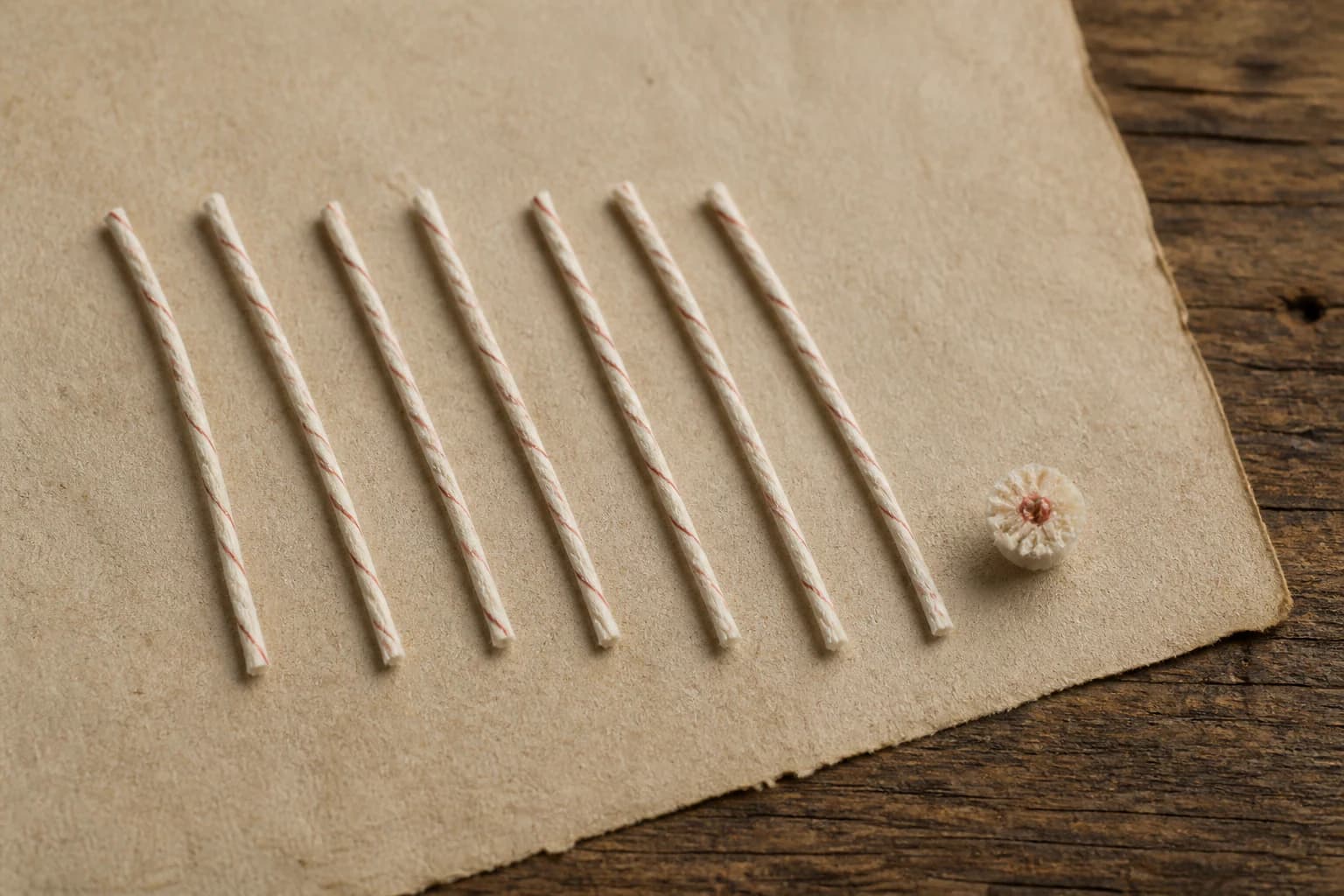
Historical Russian sources use svetilnya for the wick. A white wick with a red thread was one possible outward sign of a church candle.
The wick material used specifically at Zelino has not been established.
Sources: N. Markov, “Wax candle”, Orthodox Theological Encyclopaedia, vol. III, 1902
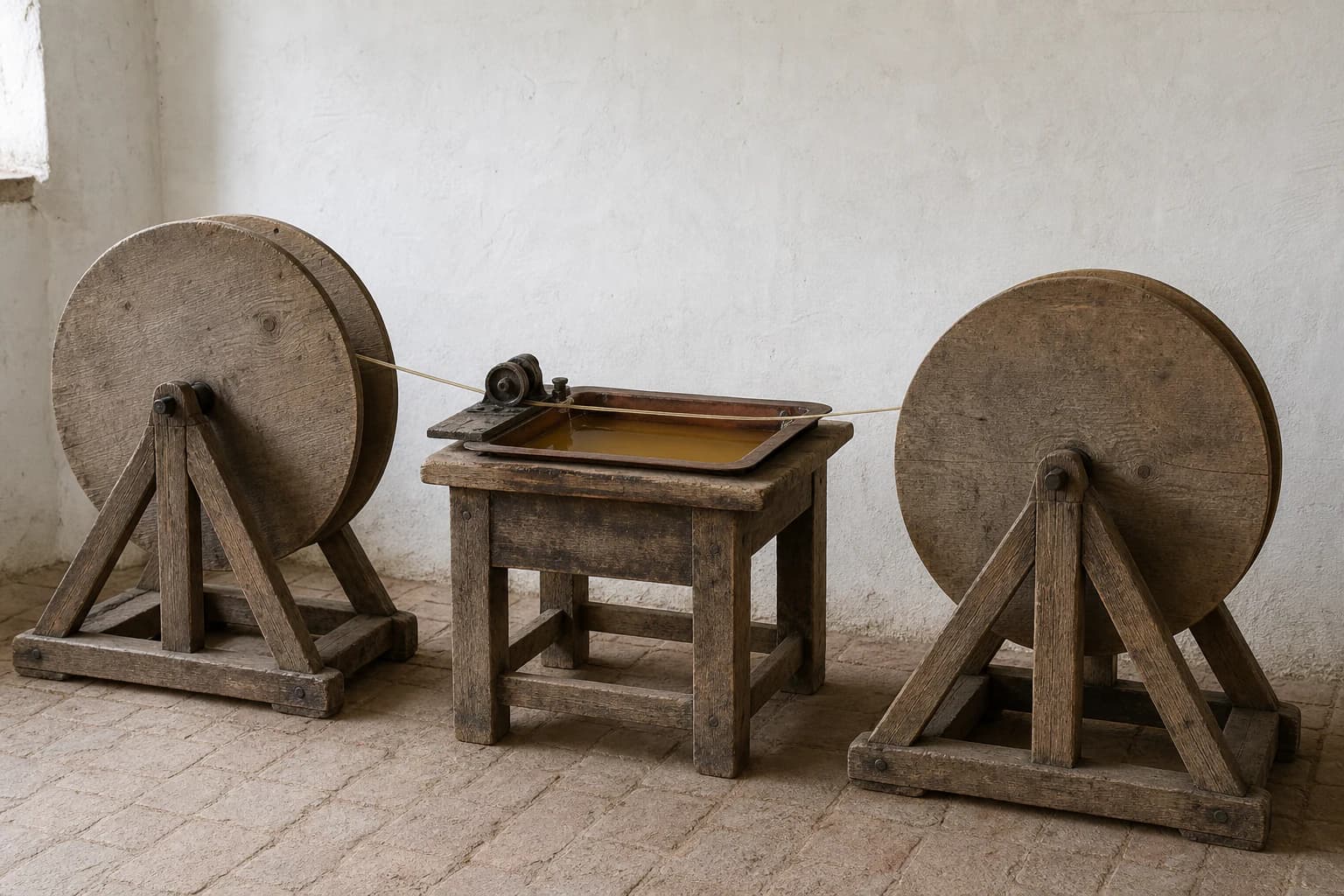
The wick passed repeatedly through wax and conical openings, building up its diameter. The Zelino workshop had three drawing machines.
No Zelino size table or factory specification has been found.
Sources: Military Clergy Herald, 1893, issue 7 · N. A. Speransky, “Candles and their manufacture”, Brockhaus and Efron, 1900
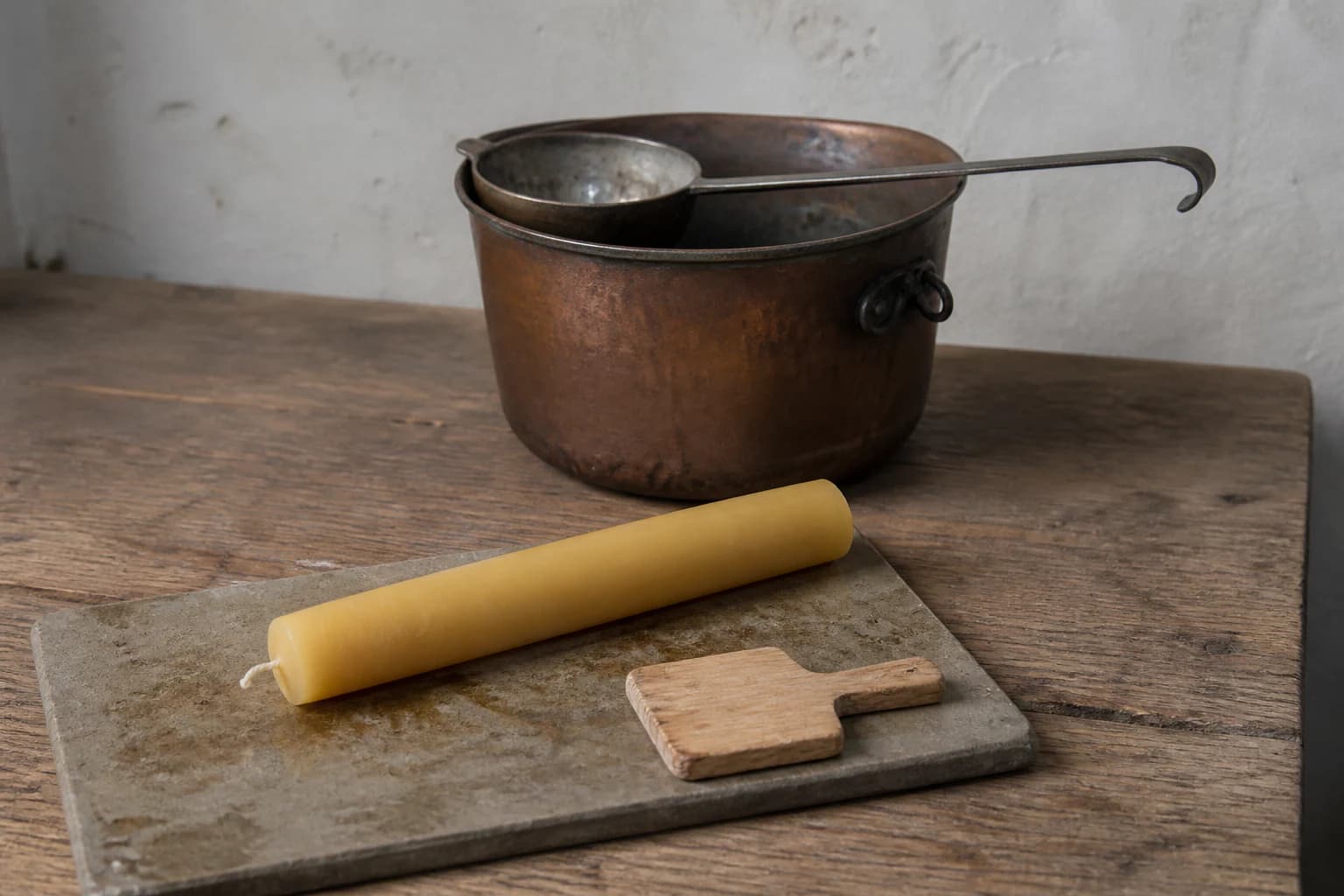
Wax was poured over the wick and the cooled candle was evened with a wooden magel. The Zelino inventory names a dipping cauldron, an oak table and a birch magel.
The sources do not recover Zelino’s temperatures or size range.
Sources: Military Clergy Herald, 1893, issue 7 · N. A. Speransky, “Candles and their manufacture”, Brockhaus and Efron, 1900
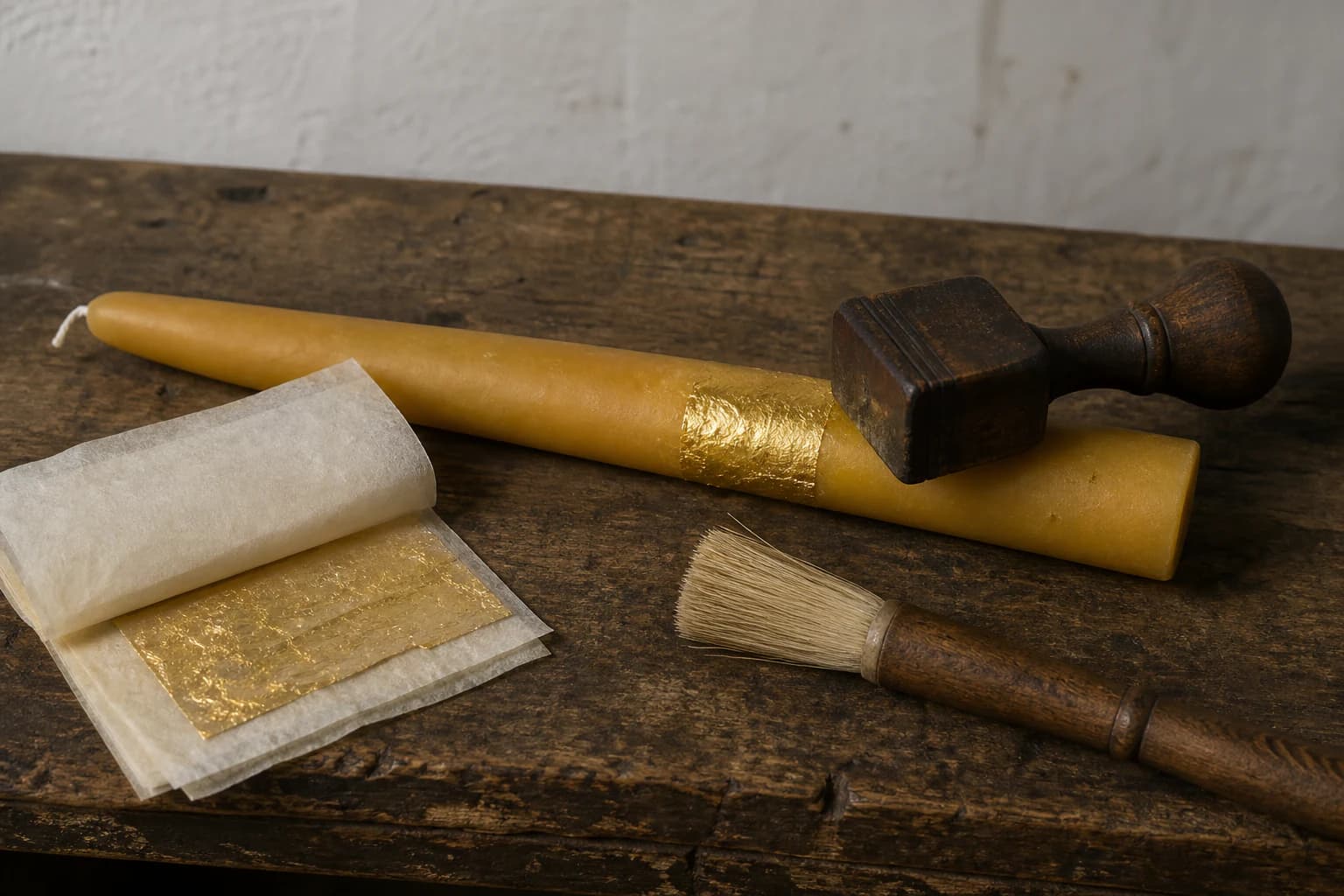
A 1900 technical article describes applying gold leaf to a warm candle; Zelino had a separate gilding room and table.
The particular pattern, materials and volume of Zelino’s gilded work are unknown.
Sources: Military Clergy Herald, 1893, issue 7 · N. A. Speransky, “Candles and their manufacture”, Brockhaus and Efron, 1900
The appearance has not been reconstructed.
Late-19th-century sources record adulteration with cheaper substances, including ceresin: appearance alone did not establish composition.
This is an industry-wide historical risk, not an analysis of Zelino candles.
Sources: “Wax”, Brockhaus and Efron Encyclopaedic Dictionary · N. Markov, “Wax candle”, Orthodox Theological Encyclopaedia, vol. III, 1902
Russian Empire
The types are organised by use, material, production method and appearance. They are not the range of a single works.
Late Imperial period, church-wide regime
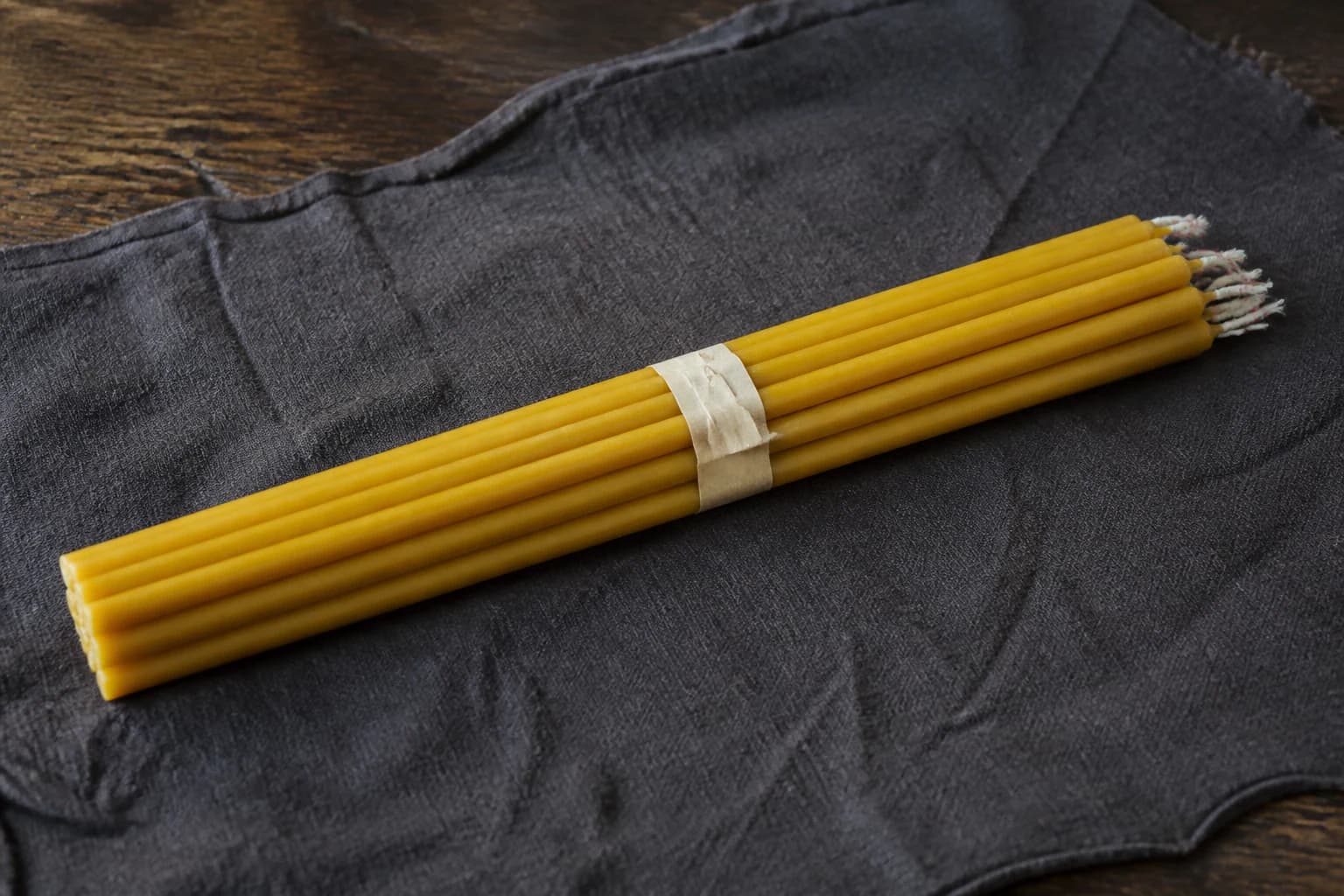
Rules of 1890 and 1892
Sources: N. Markov, “Wax candle”, Orthodox Theological Encyclopaedia, vol. III, 1902
Diocesan works and cathedral practice
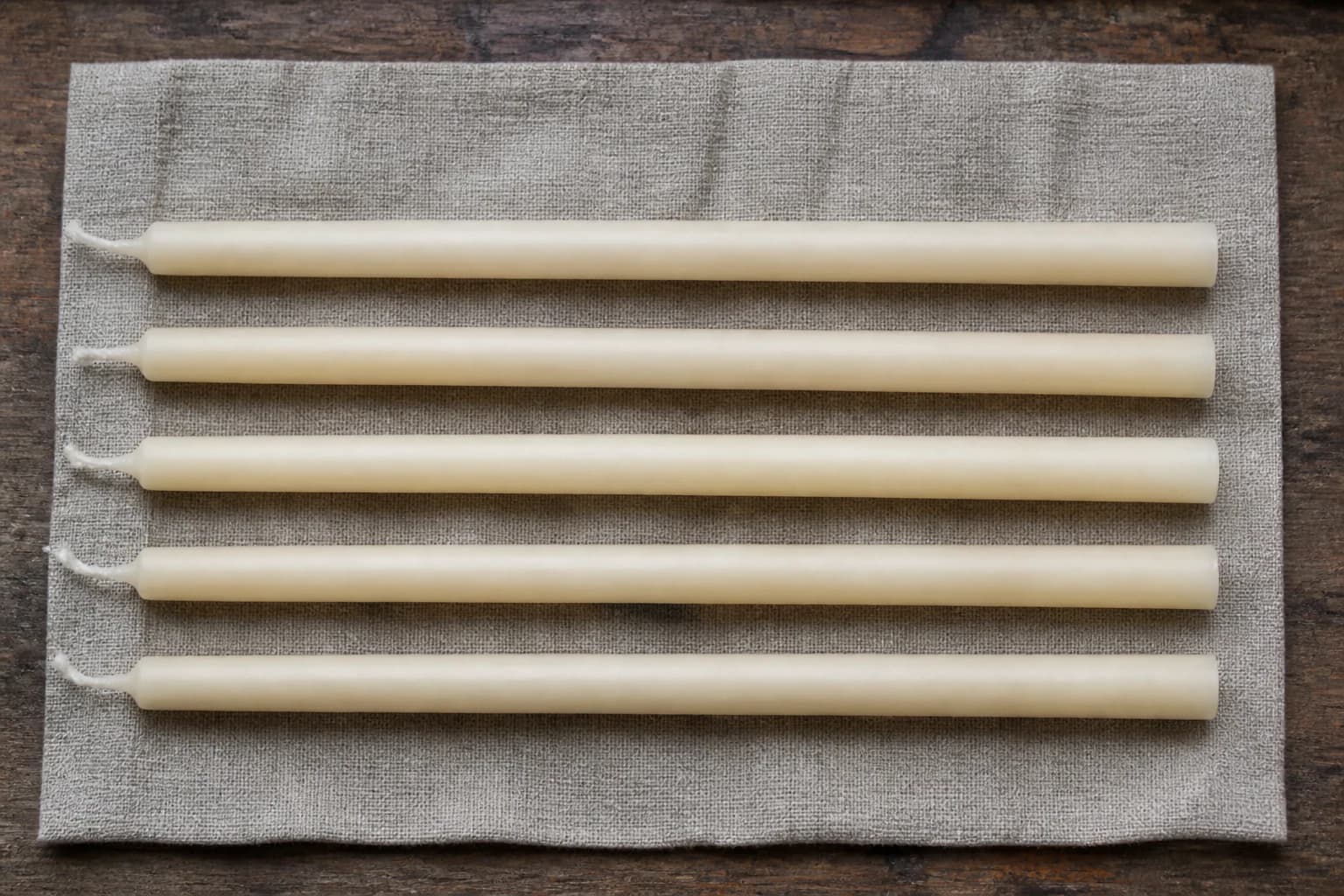
The type and historical process are documented
Sources: S. G. Runkevich, Orders and actions of the Holy Synod in 1914–1915 · N. A. Speransky, “Candles and their manufacture”, Brockhaus and Efron, 1900
Earlier Russian practice; debate of 1914–1915
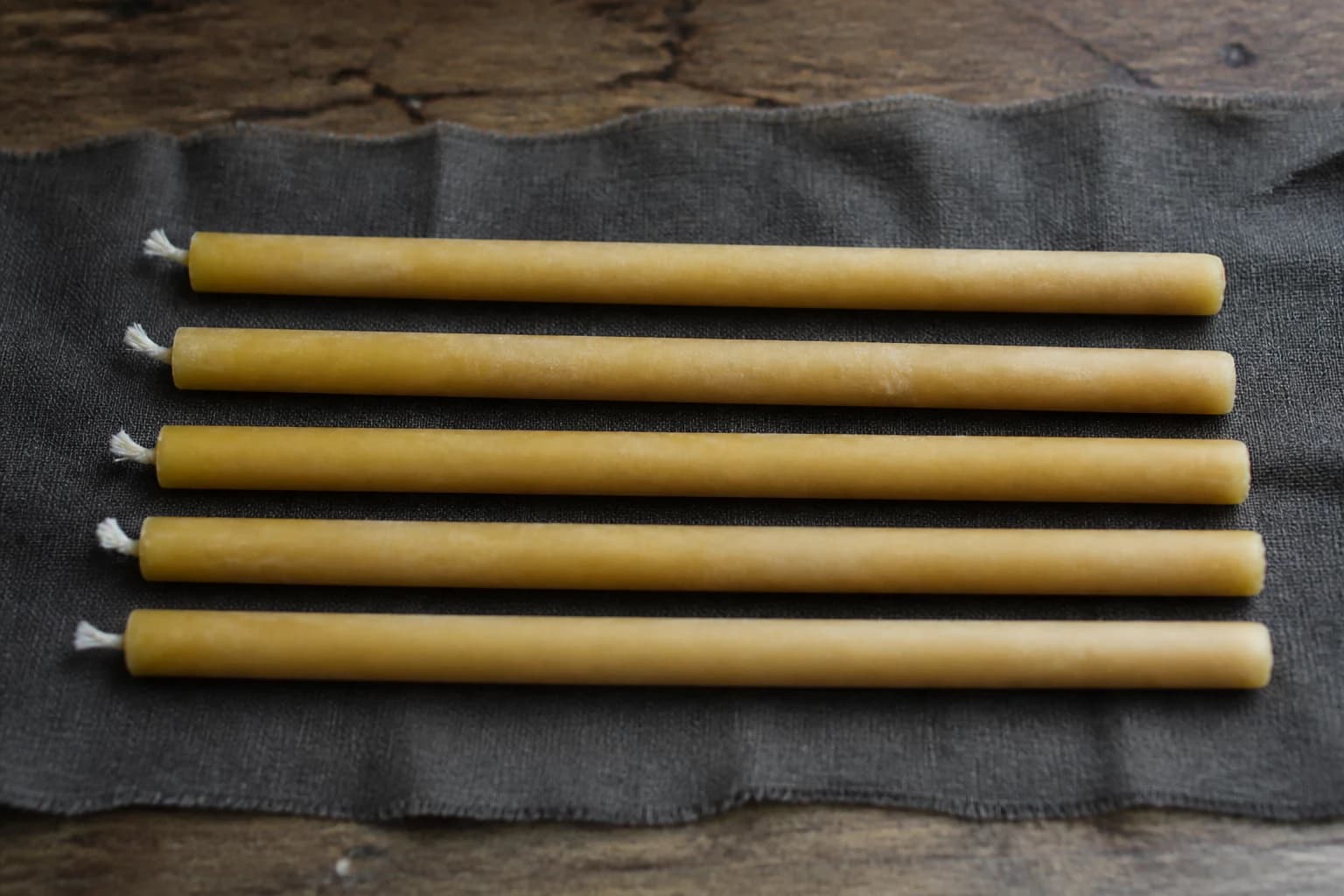
Historical position of the Committee
Sources: S. G. Runkevich, Orders and actions of the Holy Synod in 1914–1915
19th-century factory practice; Zelino, 1893
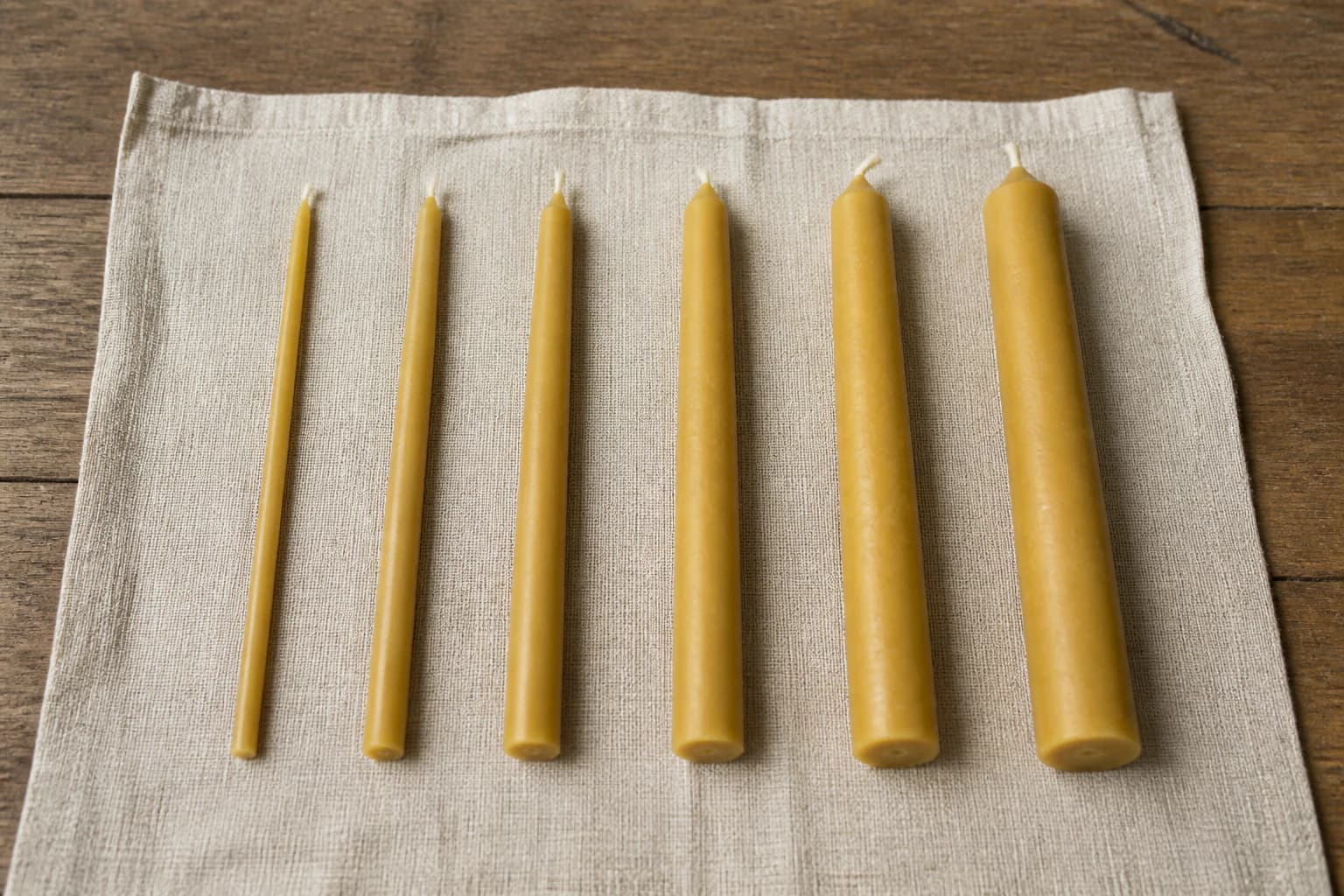
The method and equipment are documented
Sources: Military Clergy Herald, 1893, issue 7 · N. A. Speransky, “Candles and their manufacture”, Brockhaus and Efron, 1900
19th-century factory practice; Zelino, 1893
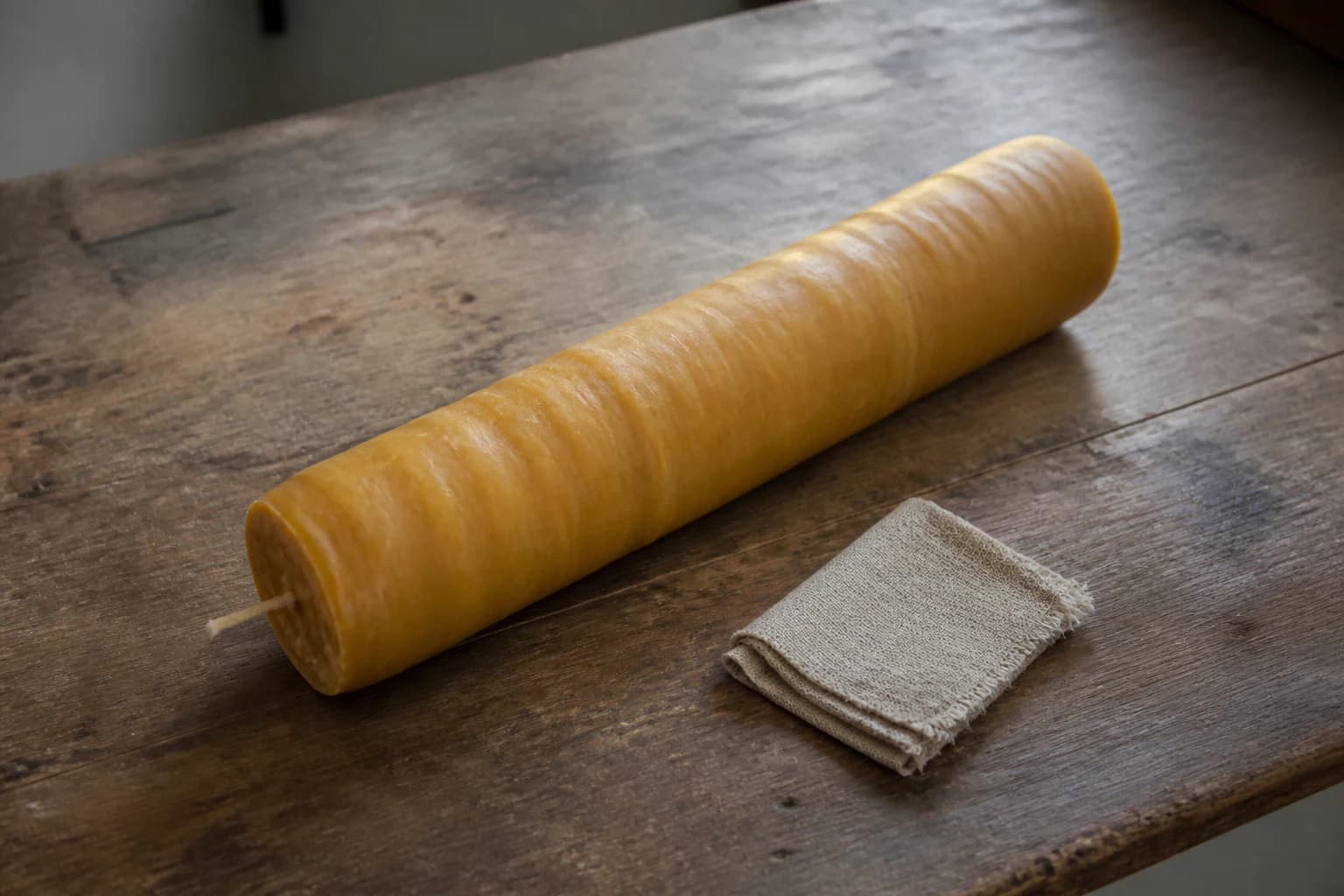
The method is expressly documented
Sources: Military Clergy Herald, 1893, issue 7 · N. A. Speransky, “Candles and their manufacture”, Brockhaus and Efron, 1900
Late-19th-century technical practice
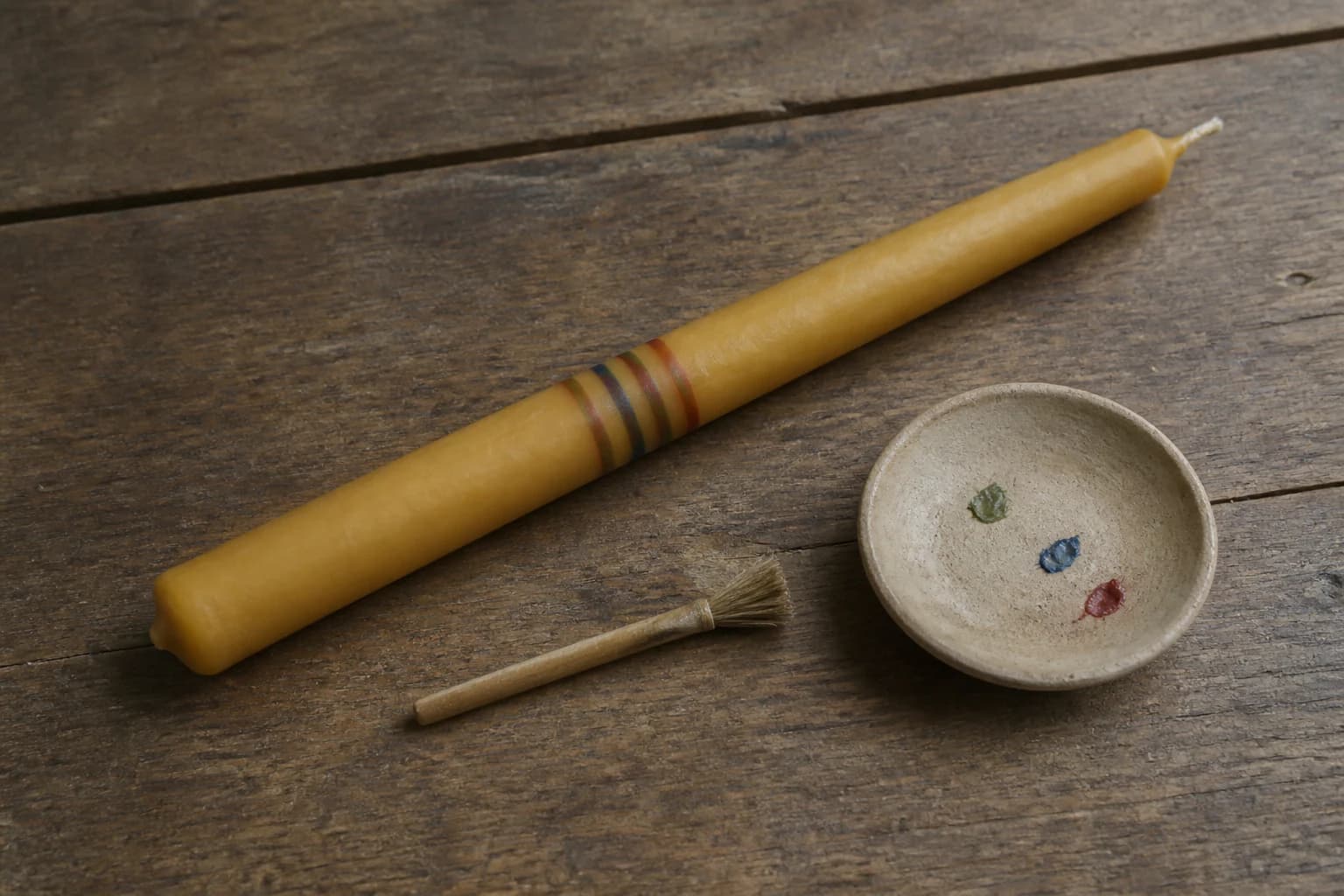
The technique, not a Zelino range, is documented
Sources: N. A. Speransky, “Candles and their manufacture”, Brockhaus and Efron, 1900
Late-19th-century market and festive finish
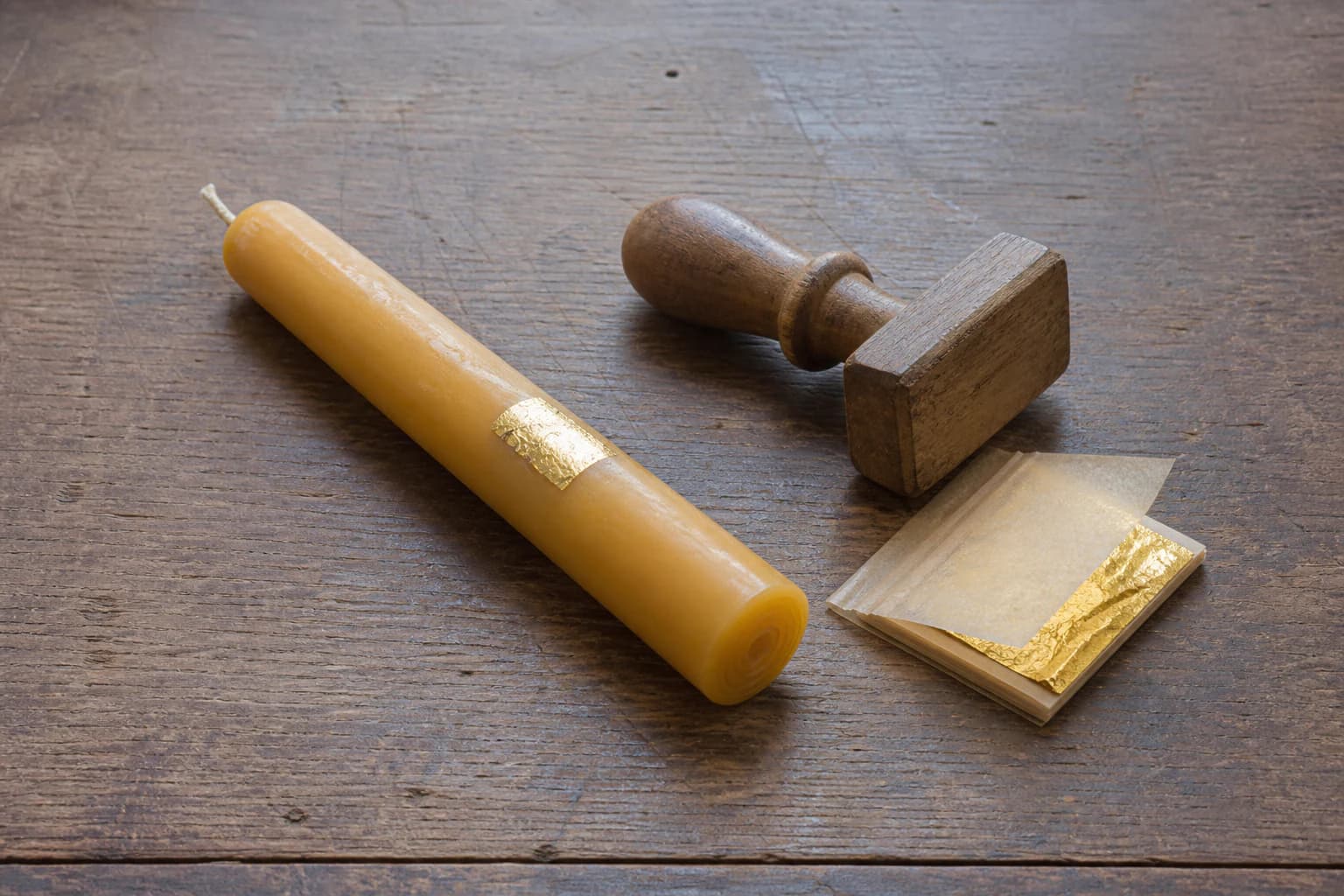
The process is documented; Zelino’s pattern is unknown
Sources: N. A. Speransky, “Candles and their manufacture”, Brockhaus and Efron, 1900 · Military Clergy Herald, 1893, issue 7
Special liturgical class
The appearance of this type has not been reconstructed.
The type is named; its production sheet is unknown
Sources: N. Markov, “Wax candle”, Orthodox Theological Encyclopaedia, vol. III, 1902
Special liturgical class
The appearance of this type has not been reconstructed.
The category is named without a full production sheet
Sources: N. Markov, “Wax candle”, Orthodox Theological Encyclopaedia, vol. III, 1902
Zelino; churches of the military and naval clergy
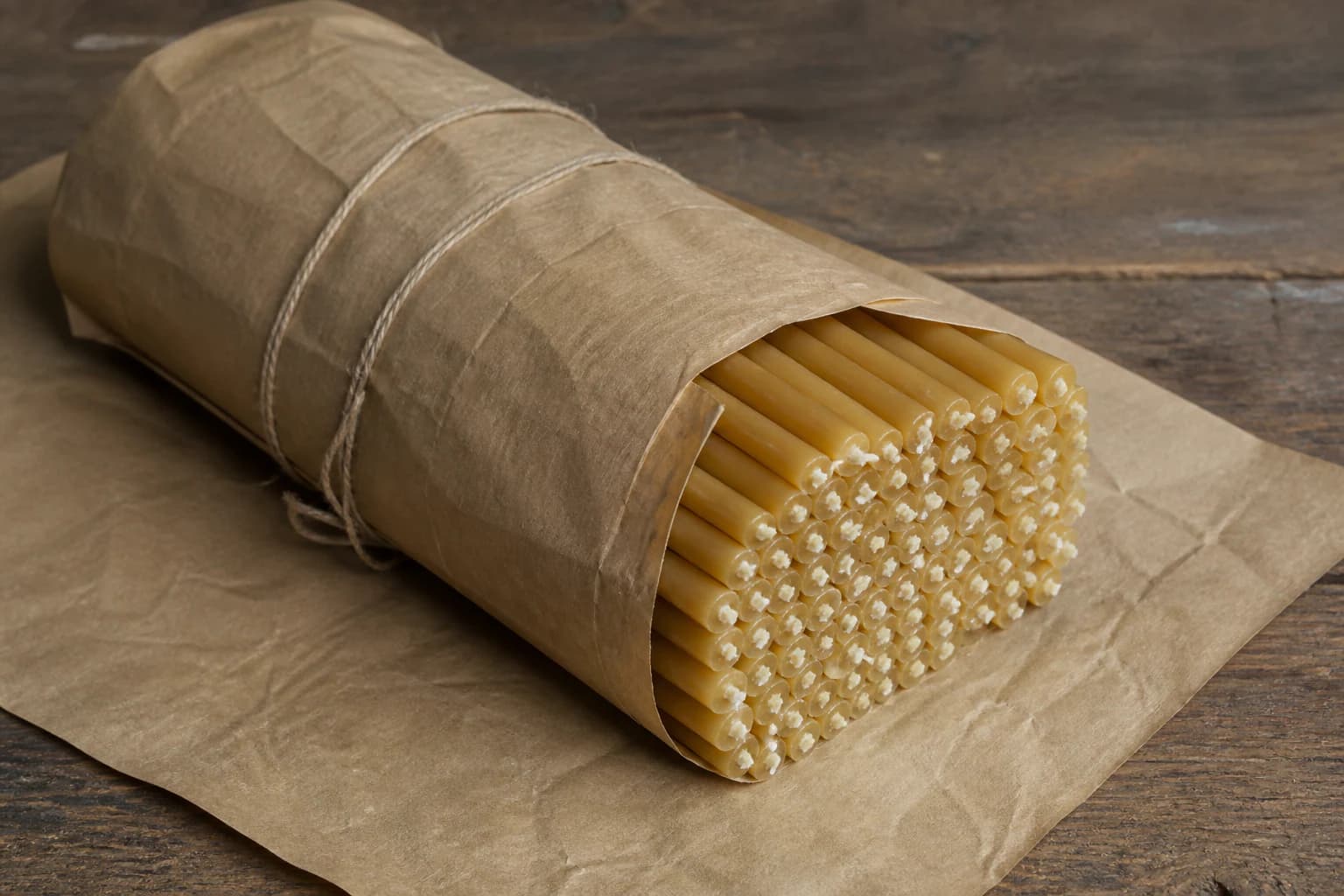
Purpose and channel are documented, not a secret formula
Sources: Military Clergy Herald, 1893, issue 7 · M. Tuchkov, “Let the candle burn!”, 2024
Urban and affluent domestic life
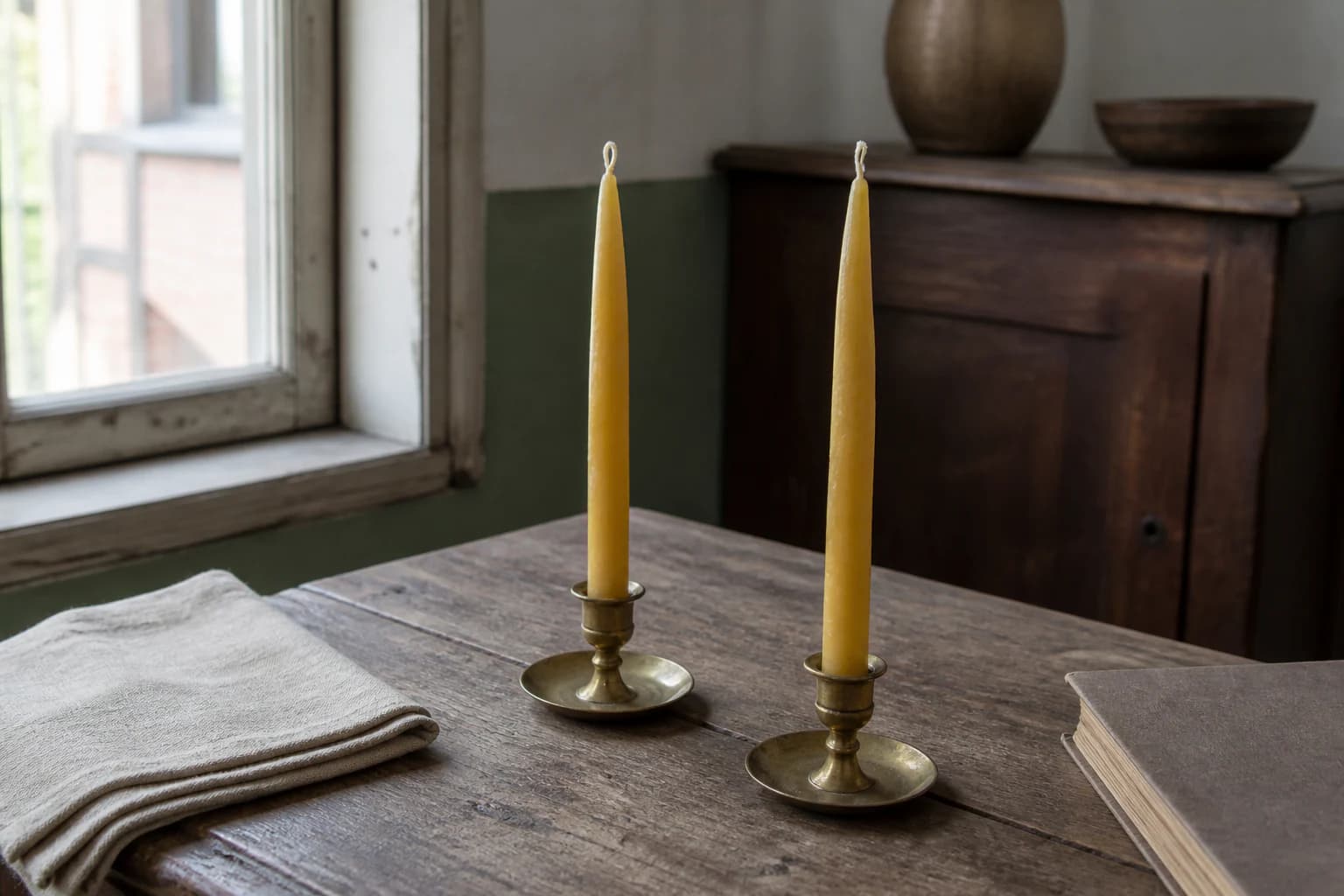
The general type is supported; the Russian range remains incomplete
Sources: N. A. Speransky, “Candles and their manufacture”, Brockhaus and Efron, 1900
The workshop in 1893
The order makes the recorded operations easier to read. It is not a reconstructed specification: the source records equipment and functions, not a complete production route.
The workshop inventory names a machine for cutting wick material.
The source does not identify the wick material used specifically at Zelino.
Three drawing machines and a dipping cauldron establish two ways of forming candles.
The source gives no dimensions, temperatures or complete sequence of operations.
An oak table and a birch magel were used to work the candles.
It is not known which sizes or batches received this treatment.
A separate gilding room contained a table for gilding candles.
No available description preserves Zelino’s pattern, materials or volume of gilded work.
Historical context
Candle making was the first documented stage of the site; the later transition to wax processing appears in the full chronology.
Industry publications explain materials, types and production methods. Historical reconstructions help visualise a described object or operation, but are not independent evidence and do not reproduce an undocumented Zelino range.